Operating at
World Cup Scale
World Cup Scale

More than a year before the first whistle of the 2026 World Cup, Solomon Group and WINK were selected from a field of more than 60 agencies to transform Atlanta’s historic Centennial Olympic Park into an official FIFA Fan Festival. Over 19 days, the festival welcomed 536,263 visits through a mix of:
Live match broadcasts
Headline concerts
Cultural programming
Local food and beverage
Immersive sponsor activations

Of the World Cup’s 16 North American host cities, 13 held official FIFA Fan Festivals. In Atlanta, the challenge was to turn a public park into a destination capable of delivering for 19 consecutive days, through shifting weather, unpredictable match results, surging crowds, and an ever-changing live event environment.


Thirty years after the 1996 Olympic Games, Centennial Olympic Park once again became a gathering place for fans from around the world. For nearly 50 days, Solomon Group and WINK led the build, operation, maintenance, and protection of the 22-acre site.
The experience was built around one idea: Welcome Home. Atlanta’s tradition of Southern hospitality shaped a festival designed not simply to take place in the city, but to belong to it. Local artists, neighborhoods, businesses, food, and cultural communities were woven throughout the experience, giving Atlantans and visiting fans a reason to make the festival their own. A 47-foot screen anchored live match viewing, while additional screens, fan zones, daily entertainment, food and beverage, and interactive experiences gave guests reasons to explore the entire park. Programming extended well beyond the matches, creating different entry points into the festival throughout the day. Commercial partners added a valuable experiential layer through commemorative merchandise, hospitality, sampling, and fan engagement, including the only LEGO activation across all FIFA Fan Festival locations.


With 536,263 visits, the festival reached a scale rarely seen in modern Atlanta. Attendance exceeded the 500k+ combined visits reported for Atlanta’s Super Bowl LIVE and Super Bowl Experience during Super Bowl LIII in 2019.
Guests returned again and again, including on days when they had no team on the field. That repeat visitation became one of the clearest signs that the festival had evolved into a destination in its own right, driven by culture, entertainment, food, community, and shared experience as much as by the matches themselves. Some attendees described it as among the “best days of [their] life.”


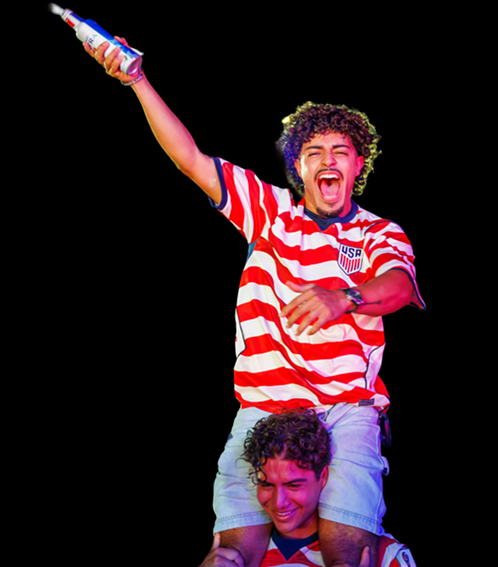
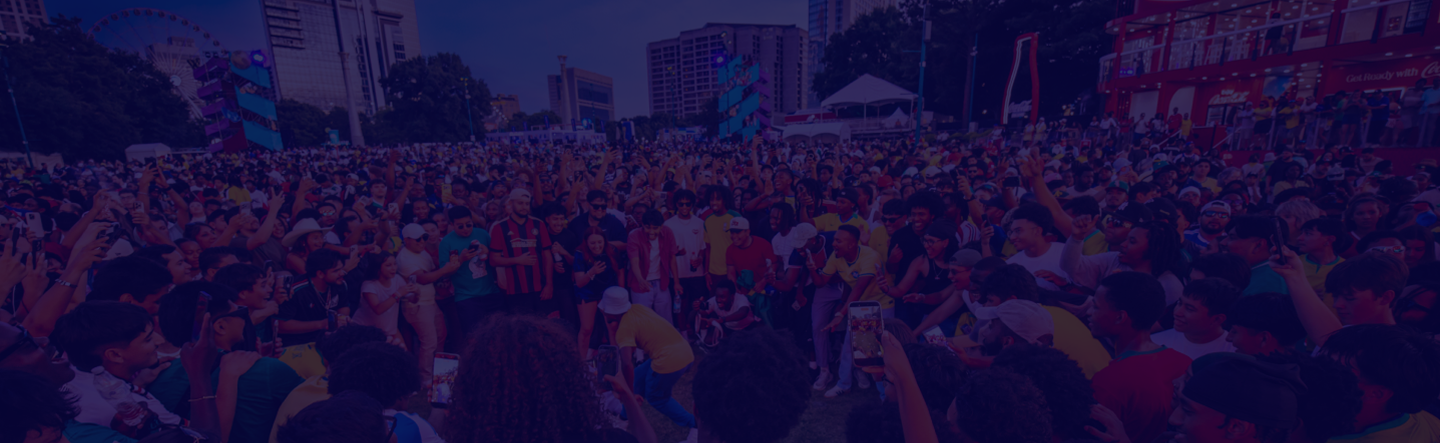
At peak moments, 17,000 guests filled the park at once, while daily turnover climbed above 45,000. Delivering that volume safely and consistently required production, operations, public safety, transportation, programming, hospitality, and commercial partners to function as one coordinated system. Throughout the entire experience, we:
Across 19 operating days, the team delivered 56 live match broadcasts, 186 hours of programming, 16 commercial partner activations, and more than 100 food, beverage, retail, and community partners.

For a world that spends more and more time online, the most powerful live experiences create a reason to participate, not just attend. In Atlanta, the World Cup provided the global stage, but the city’s culture and communities gave people reasons to stay, return, and discover something unexpected.
Some came for soccer and found music, food, brands, and new communities. Others arrived for entertainment or an activation and found themselves drawn into the tournament. For commercial partners, that created 19 days of repeated, in-person engagement inside an experience people actively chose to revisit.
That is the power of real life, and the kind of experience Solomon Group and WINK set out to create: turning a global moment into something that feels personal, local, and worth belonging to. In Atlanta, that approach helped create what Mayor Andre Dickens described as “an impact that will resonate for decades.”


